
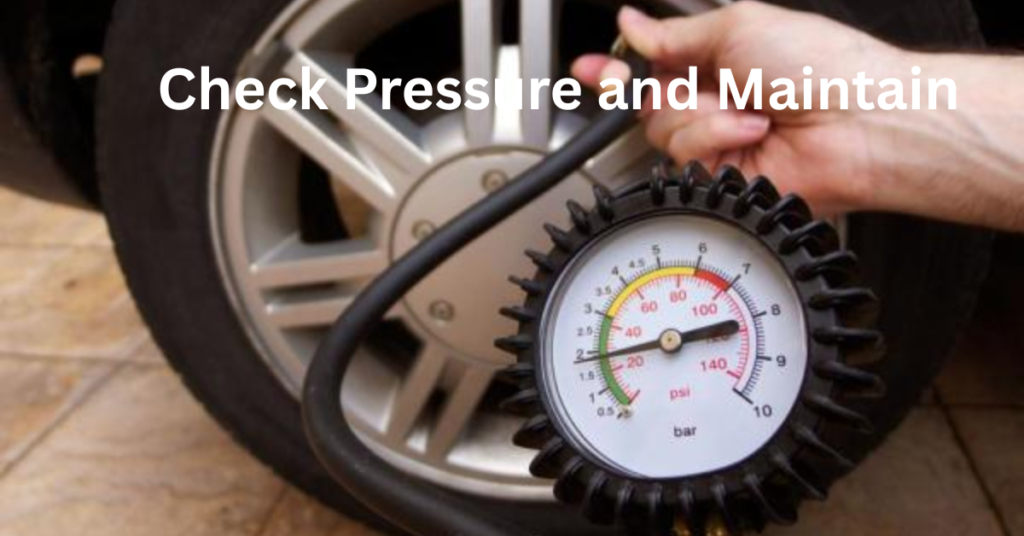
Did you know that underinflated tires are a leading cause of tire blowouts, poor fuel economy, and uneven tread wear? According to the U.S. Department of Energy, keeping tires properly inflated can improve gas mileage by up to 3%—saving the average driver $100+ per year at the pump.
This guide will teach you how to check tire pressure correctly, when to adjust it, and why it matters for safety, performance, and cost savings.
Why Proper Tire Pressure Matters
1. Safety Risks of Incorrect Pressure
- Underinflation → Overheating, blowouts, longer stopping distances
- Overinflation → Reduced traction, harsher ride, center tread wear
2. Performance & Cost Impacts
✔ Better fuel efficiency (Save $$ at the pump)
✔ Longer tire life (Avoid premature replacements)
✔ Smoother handling (Improved steering response)
How to Check Tire Pressure (Step-by-Step)
What You’ll Need:
✔ Digital tire pressure gauge (More accurate than stick-type)
✔ Air compressor (Gas stations or portable units work)
✔ Owner’s manual (For recommended PSI)
Step 1: Find the Recommended PSI
- Check the driver’s side door jamb sticker (NOT the tire’s sidewall).
- Most passenger cars need 30–35 PSI (varies by vehicle).
Step 2: Check When Tires Are Cold
- Measure before driving or after sitting for 3+ hours.
- Heat from driving increases PSI, giving false readings.
Step 3: Remove Valve Cap & Press Gauge Firmly
- Press the gauge straight onto the valve stem.
- A hissing sound means it’s not sealed properly.
Step 4: Compare to Recommended PSI
- If low, add air in small bursts, rechecking often.
- If high, press the valve core to release air slowly.
Step 5: Recheck & Replace Valve Cap
- Valve caps keep dirt out and prevent leaks—don’t lose them!
When to Check Tire Pressure
✅ Monthly (Tires lose ~1 PSI per month naturally)
✅ Before long trips (Heavy loads affect pressure)
✅ After temperature swings (10°F change = ~1 PSI shift)
Common Tire Pressure Mistakes
❌ Relying on gas station gauges (Often inaccurate)
❌ Using the tire’s max PSI (Follow vehicle specs instead)
❌ Ignoring the spare tire (Check it too!)
FAQs
1. How often should I check tire pressure?
At least once a month and before road trips.
2. Can I check tires when they’re warm?
Only if you add 3–4 PSI to the recommended cold pressure.
3. What’s the best tire pressure gauge?
Digital gauges (10–10–20) are most accurate.
4. Does TPMS replace manual checks?
No! TPMS warns only when tires are severely underinflated (25% below recommended).
5. Why does my tire pressure light keep coming on?
Could be a slow leak, temperature change, or sensor issue. Check manually first.
6. Is nitrogen better than air for tires?
Marginally—it loses pressure slower, but properly maintained air-filled tires work fine.
Final Tips
✔ Keep a portable gauge in your glovebox.
✔ Check pressure before sunrise for coldest readings.
✔ Rotate tires every 5,000–7,500 miles for even wear.
Proper inflation is the easiest way to save money and stay safe! 🚗💨
The Essential Guide to Proper Tire Pressure: Safety, Savings & Performance
Keeping your tires properly inflated isn’t just about avoiding a flat – it’s one of the easiest and most impactful ways
🔥 Prevent dangerous blowouts (Underinflation causes 11,000+ crashes yearly)
💰 **Save 100+annuallyongas∗∗(ProperPSIboostsfuelefficiency3🛡®∗∗Extendtirelifeby4,700+miles∗∗(Avoidpremature100+annuallyongas∗∗(ProperPSIboostsfuelefficiency3🛡R◯∗∗Extendtirelifeby4,700+miles∗∗(Avoidpremature500+ replacements)
This no-fluff, step-by-step guide gives you everything you need to master tire pressure maintenance like a pro mechanic. You’ll discover:
✅ Where to find your vehicle’s EXACT recommended PSI (Hint: It’s NOT on the tire!)
✅ When & how to check pressure for accurate readings (Avoid this common 3 PM mistake)
✅ Pro tips for using air pumps & gauges (Plus which type gives military-grade precision)
✅ How temperature changes secretly alter your PSI (And when to compensate)
✅ TPMS vs manual checks (Why your dashboard light isn’t enough)
Backed by NHTSA safety data and AAA expert recommendations, these 5-minute monthly checks could be the difference between a safe commute and a roadside emergency.
Don’t gamble with your safety or wallet – arm yourself with the knowledge most drivers never learn. Your tires (and your bank account) will thank you!